



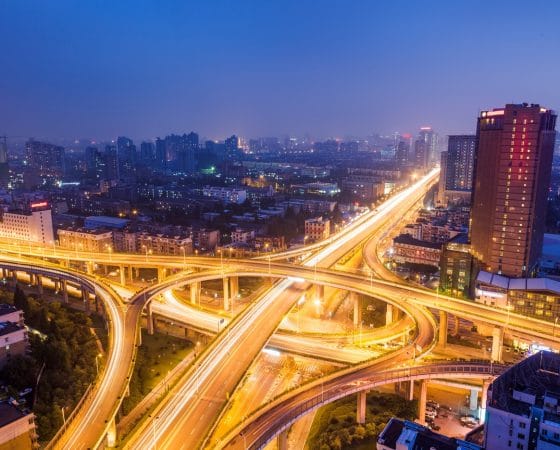
Driverless transport; flying or driving – being aware of hazards and objects to allow planning (but not replace realtime object detection). Using the PROWL system, vehicles can be made aware of known obstacles and hazards – all updated regularly.
Would you like to be able to summon a flying taxi to your location, step on board and then get out a book or keep up to date on your social media – all whilst the driverless transport does it’s job of getting you from A to B?
Real automation becomes possible if the vehicle is able to plan it’s journey based on knowledge of the path. More than just a map of where roads are on the ground (like a TomTom or NavMan), the PROWL system will enable prior knowledge of topography, accurate details of hazards and objects outside of the road network, and provide an extensible reference of real-world objects in three dimensions. Automated driverless and pilotless transport becomes possible when the vehicle can be trusted to avoid known objects.
PROWL will provide a basis for planning and gross detail for automation to use as a reference. This will need to be supplemented by on-board collision detection and avoidance (such as stereoscopic cameras, ultrasound or radar) to cope with rapidly changing objects – such as birds, animals and people. PROWL is needed to be used prior to on-board detection technologies, because a flightpath needs to be planned to ensure that a valid route is selected. However, with these two approaches used in conjunction, the vehicle can be left to be fully automated to perform it’s task.